Showing posts with label players with whom my problem never was. Show all posts

Sunday, April 24, 2011

Rays 6, Blue Jays 4: Morrow Returns; Bautista Owns

Jose.
OK, yeah, the Blue Jays lost. The Rays' David Price, who continues to be excellent at pitching --and who, it has seriously been reported, was heard to remark during batting practice Friday afternoon, "These guys have Juan Rivera?" -- made it into the ninth, and it took him only 102 pitches to do it. The Blue Jays' nifty little comeback in the bottom of the ninth was probably cut short, in part, by a bad call, as replays made it quite clear that Travis Snider beat the throw on that bunt with two on and nobody out. None of that is great, but I went into the game expecting to lose to David Price, and we did, so I am not going to dwell on any of that.


Instead, I am going to focus on Brandon Morrow's first start of the season. He looked good! Yes, there was the two-run homer he gave up in the first to Johnny Damon (a player with whom my problem never has been), which was not an inspiring beginning, but in the end Morrow pitched into the sixth, allowed three runs, and struck out ten. He only walked two, but both times it was Sam Fuld on really close pitches, and both times Fuld came around to score on home runs. Morrow threw way too many pitches, too, but that's an inescapable part of his deal. 


I would also like to draw your attention to Jose Bautista, who went 3-3 with two home runs and a walk. Bautista, who owns, has now reached base in ten consecutive plate appearances, and is closing in on the club record of twelve, held improbably enough by Lyle Overbay of all people. Bautista is leading the league in home runs (7), batting average (.371), OBP (.506), and haters silenced (all of them). Also he is second in slugging (.774) and OPS (1.281). If you do not love him, it is because of emotional problems that you have.


KS

Thursday, April 21, 2011

Yankees 6, Blue Jays 2: Brett Cecil Down, Chris Woodward Up!

Sweet circle change, bro.
After last night's 6-2 comedown against the Yankees, I was all set to start this post by being all, "I don't want to be an alarmist or anything but is it too soon to be really worried about Brett Cecil?" And then I find out that he'd actually been sent to the minors. This is being described as a surprise move, and you can forilla gorilla number me among the surprisรจd. Cecil had a really solid 2010, and I figured he was our number three guy for the foreseeable future. Maybe he will be once he gets straightened out, but for now, this is just weird. That makes Cecil and Litsch demoted in the last week, and yet somehow Jo-Jo Reyes remains. At a certain point you just have to embrace the mystery, and I know it's only three weeks into the season, but I am just going to ahead and embrace it now (preemptively, really, before it deepens further).


No less mysterious is the call-up of Chris Woodward, who I recalled with probably disproportionate fondness here. As I said there, I have watched a lot of shitty baseball in my time, and Chris Woodward was certainly the starting shortstop for a good deal of it, but Chris Woodward is a player with whom my problem never was. I welcome his return to the fold, even if I do not entirely understand it.


KS

Wednesday, March 2, 2011

Garret Anderson, guy who hit a lot of doubles, retires


Garret Anderson, who yesterday announced his retirement after seventeen seasons, was perhaps foremost among the players with whom my problem never was.  Anderson had a look and aspect of another era, a classy mustachioed era that may have only ever existed in the mind, and he hit a ton of doubles.  I really liked the good Angels teams of the early 00s.  They played a scrappy yet nimble, first-to-third style that stood in stark contrast to the fat- and steroid-fueled Moneyballedness that was all the rage elsewhere.  And good for them.  And for us, too: you can totally acknowledge that high batting averages can mask poor overall on-base ability (this was where Garret Anderson really excelled), and that bases have to be stolen at an extraordinarily high rate of success to be of any tangible net benefit to offensive production, and that playing for a single run by relying on the bunt is more often than not detrimental, and still want to see all of those things happen because they're awesome.  The Angels were like that, and kind of still are.  Go Angels.     

KS

Monday, February 21, 2011

BaseballFeelings.com: Official Sponsor of Alfredo Griffin's Baseball Reference Player Page


Ken Griffey slid in hard. Alfredo Griffin remained unshook.
Behold!  


Why Alfredo Griffin?  There are several reasons, really:


(i) Bill James, in The New Bill James Historical Baseball Abstract: "One thing I have always wanted to do was to document Alfredo's baserunning exploits.  He really was phenomenal.  I personally saw him score from second on a ground ball to second, scoring the lead run in the top of the ninth.  I have heard about Alfredo doing things like first-to-third on infield outs, moving second-to-third on a pop up to short, scoring on a pop out to the catcher, and taking second after grounding into a forceout.  Alfredo figured that if you left the base unguarded, it was his.  Somebody ought to make a documented list of those basepath heroics, with dates and specific times, before it gets away from us."  Elsewhere in the same weighty, weighty tome, in an entry on George Scott, James writes, "I don't know that I've ever seen any other player score from second on a fly ball, except maybe Alfredo Griffin."   


(ii) John Feinstein, Washington Post, July 10, 1984: "Making the All-Star team the hard way: Major league baseball pays the expenses for each player here and for one guest. In most cases, players bring wives or girlfriends. Damaso Garcia, the Toronto Blue Jays' second baseman, brought his shortstop, Alfredo Griffin. When the Tigers' Alan Trammell hurt his arm and could not play tonight, Manager Joe Altobelli named Griffin to the team, partly because he's a fine player, but mostly because he was here."


(iii) From the New York Times, November 18, 1987: "Alfredo Griffin, the Oakland Athletics' shortstop who is being pursued by a number of teams, including the Yankees, has rescinded his demand for a trade. So now there is a greater chance than ever he will be traded. The explanation? Last week, Griffin exercised a clause in his contract demanding a trade, presumably in an attempt to gain a lengthy contract extension but also making difficult any attempts by the Athletics to trade him by saying he would veto deals with the Yankees, Los Angeles, Montreal, Philadelphia, Houston and Boston." 


(iv) Do you know what would have happened if Joe Carter hadn't taken Mitch Williams' 2-2 pitch over the left field fence in Game Six of the 1993 World Series?  What if he'd, I don't know, taken a called third strike, or lined one right at Mickey Morandini? Well, I'll tell you: Alfredo Griffin would have reached on a swinging third strike and in the ensuing confusion both Ricky Henderson and Paul Molitor would have come in to score, thus ending that amazing game in an even sicker fashion.  Because, strangely, Alfredo Griffin was on deck. He came into the game as a pinch runner for John Olerud an inning earlier.  Consider, if you even can, the difference in baserunning ability between John Olerud and Alfredo Griffin.  It's one of those things that, as it starts to come into focus for you, you begin to worry that you're losing your grasp on everything else -- like, in the universe -- and so you pull back almost instinctively.  Is that the sublime?  Also, for this whole scenario to have played out, Henderson and Molitor would have had to have moved up on a passed ball, wild pitch, a double steal, or, preferably, a delayed double steal.  As it stands, waiting in the on-deck circle watching Joe Carter's drive sail over the wall was the final moment in Alfredo Griffin's career as a player.  


(v) Despite winning Rookie of the Year for a solid 1979 (my own rookie season, incidentally), Alfredo Griffin actually managed to contribute negative Wins Above Replacement over the course of eighteen professional seasons for which he was paid a total of $6,582,742. That, in and of itself, is a monumental achievement.     


(vi) By having been rad for both the Toronto Blue Jays and the Oakland Athletics (in addition to, though less importantly, the Cleveland Indians and the Los Angeles Dodgers), Alfredo Griffin brings us together here at Baseball Feelings.  At least two of us, anyway. And possibly more.  But at least two of us are united in our admiration for this deeply odd, beautifully useless, entirely awesome player.  We may never see his like again.       


Uh oh, I don't think that one's got the legs!
GO HOME IT'S A DRIBBLER TO SECOND
KS

Wednesday, February 16, 2011

Here is what I love about Tony Fernandez, aside from, like, the existential fact of Tony Fernandez

Such a stance.
Tony Fernandez is known to you, and indeed quite possibly loved by you, if you are a fan of, OK, let's see: the Toronto Blue Jays, San Diego Padres, New York Mets, Cincinnati Reds, New York Yankees, Cleveland Indians (though that one's complicated), Seibu Lions, or Milwaukee Brewers.  In the New Bill James Historical Baseball Abstract, which is the one you bought in 2001 after you read about it in Rob Neyer's column, Fernandez is ranked as the twenty-fourth best shortstop in baseball history according to James' then-novel, now-who-cares Win Shares formula (each Win Share is equal to exactly one third of a win! and there's no such thing as a negative Win Share so anything negative just gets zeroed out and diminishes the Win Share totals of everyone else on the team and the whole thing doesn't really make sense! OK cool!). Here is the complete text of the Fernandez entry in that weighty, weighty tome: "Hit .300, as a regular, in 1986, 1987, 1998, and 1999 -- but had an eleven-year stretch in mid-career in which he never hit higher than .287.  He is currently (year 2000) playing with the Seibu Lions in Japan. This cuts the number of teams that he has never played for to three."  This is pretty comprehensive.  I might have added something about how the way he would sidearm the ball to first was the coolest thing ever, but aside from that, all of the essentials are there.  Tony Fernandez hit for a nice average, and he played for pretty much everybody.  But what is neatest about Tony Fernandez, I think, is that he had four separate stints with the Blue Jays.  Four!    

Such a feed.
And the thing about that is this: Tony Fernandez is like a thread woven through the history of the Toronto Blue Jays, or at least the first twenty-five years of it.  If that last sentence is clumsy, you can take it up with the late great Tom Cheek for it, because he said it on the radio in 2003 and I wrote it down in my scorekeeping book and now eight years later, there it is, and if you don't like it, then yeah, take it up with a man who is dead, better than you, and also obviously correct, so you will lose badly for at least those three reasons.
There's nothing especially profound about it; it's just true, and neat.  Fernandez was signed in the Dominican Republic in 1979 by Epy Guerrero, the name most closely associated with how the Blue Jays, from the early days up to and and including the signing of Carlos Delgado years later, were totally on top of things in the Dominican.  Fernandez was called up in 1983, the first winning season in Toronto, and by the time they were among the best teams in baseball two years later, he had taken over for Alfredo Griffin as the everyday shortstop (Alfredo Griffin: another strong source of baseball feelings). And, yeah, maybe they blew it in 1985.  OK, they obviously, totally blew it in 1985, and went from a 99-win team to an 86-win team the next year, but the Blue Jays had arrived.  And so had Tony Fernandez: in the next four years he picked up four Gold Gloves, made three All-Star teams, and finished in the top ten in MVP voting for his pretty rad 1987 season (.322/.379/.426/many awesome sidearm throws to first).  The Blue Jays were winners, if not champions.  Tony Fernandez was an All-Star, if not an MVP.  Everything was cool.

Such a turn.
Then, in a move that shocked every twelve-year-old in Canada, Fernandez and Fred McGriff (who Joe Torre says in The Yankee Years "scared the shit" out of him, and rightly so) were traded for Joe Carter, who we kind of remembered as an Indian, and Roberto Alomar, who we'd never heard of, because he played in the National League, which, what the hell?  Anyway, as history has shown, that totally worked out.

And it was really, really cool that Tony Fernandez managed to make it back in time to get in on the championship years.  He'd been totally solid in San Diego before playing just awfully for the Mets, which meant a mid-season trade back to Toronto, where he utterly tore shit up for the remainder of the year and drove in nine runs -- Tony Fernandez drove in nine runs -- in the 1993 World Series.  That was awesome.  

Such a World Series.
To be completely honest, before sitting down to write this I couldn't have told you that Fernandez had spent any time at all with the Reds, but apparently he did the very next season.  I remember him much more clearly as a Yankee, though, I guess because we saw a lot of the Yankees, and then there was the whole Cleveland thing, in which Tony Fernandez was like "here you go, long-suffering Cleveland Indians fans, enjoy this game-winning home run to win the pennant and oh hey sorry about this error in the bottom of the 11th in game seven of the World Series because frankly that is totally my bad."  I don't know any real life Indians fans, or even any internet Cleveland fans, so I don't know this for sure, but I'm guessing they think that sucked.   

Then back to Toronto for the aimless Roger Clemons years!  And sort of year-zero in the Roger Clemons Path to Ruin story that is kind of my favourite thing going in the off-field world of baseball right now.  I actually think of the post-World Series, post-Pat Gillick years as kind of the "I found a baby squirrel, now what do I do" era, because Gord Ash, god love him, he really had no idea what was going on.  The Blue Jays went from back-to-back World Champions to just being a bad, expensive ball club in pretty much no time, and there really wasn't much accounting for it.  I have no interest in hating on Gord Ash, and you've got to love the way he worked himself up from the ticket office to the General Manager's office, but I don't know, it was like he was playing Strat-o-Matic up there or something (on a related note, let's all play Strat-o later).  Just a depressing time.  Aimless.  Aimless years.   

Things were really no less aimless two years later when Tony Fernandez came back to wrap things up in late 2001.  There was a real sense of exhaustion at that point.  House was about to be cleaned.  J.P. Ricciardi was about to come in and moneyball us into the future, which is to say he was going to lowball Carlos Delgado, the best player in franchise history (Alomar was better but didn't stick around very long), sign the lovable Vernon Wells and the utterly contemptable Alex(is) Rios to atrocious contracts, and generally make things so hopeless that Roy Halladay would politely ask to leave.  But before that lost decade could take shape and really get good and lost: the 2001 Tony Fernandez victory lap, the highlight of which, other than a surprisingly moving pre-game speech he made late in the season, came on September 4, when he hit a pinch-hit grand slam against the Yankees.  It wasn't crucial or anything: the game was a laugher. But I do not need to explain to you why this was an awesome thing to have happened.  And it was also awesome that Tony Fernandez was retiring at the end of the Blue Jays 25th anniversary season, because, yeah, like Tom Cheek said: a thread woven through the history of the Blue Jays.  There you go.  
Such a swing.
KS

Monday, February 14, 2011

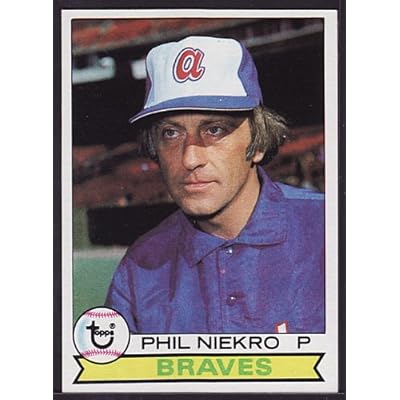
Historical Travesties No One Remembers: Phil Niekro, the Uncrowned Winner of the NL Nonuple Crown

First things first: The word "nonuple" means "units of nine". Single, double, triple, quadruple, quintuple etc. In 1979 the world was witness to one of the most mind blowing seasons ever put together. 40 year old knuckle baller Phil Niekro lead the NL in 9 categories. NINE. And while not all of these categories were ones you'd want to lead the league in, the mere fact that he did it is amazing. He managed to lead the league in 9 categories while playing on an absolutely awful Braves team that lost 94 games. So sit back and take this in, and then try to imagine it happening in modern baseball. No way in HELL the world will ever see another season like the one Phil had in '79.

Phil lead the league in starts with 44. Now, even though at the time most teams only had a 4 man rotation with a 5th man being used as a spot starter/long reliever, this number is still pretty amazing when weighed in comparison to todays starting pitchers who usually make between 30-34 starts, barring injury. Even more amazing is the fact that the Eddie Solomon finished second on the Braves in starts with 30. Phil Niekro took the mound 14 times more than any other starter on his team. Again, that's something we'll never see again. Sure, a lot of that had to do with him being a knuckle baller and being able to start on 3 days rest, but it's still kinda mind boggling. A 40 year old starting nearly 1/3rd of his teams games is pretty amazing.

In those 44 starts Phil won a league leading 21 games. Of course, as we've learned over the years, there are numerous better ways to judge the value of a pitcher than by their amount of wins. In this case, Phil was the winning pitcher in 21 of the Braves 66 wins. Again, pretty amazing. Here's where it gets crazy: In his 44 starts he LOST 20 games, good enough to lead the NL. HE WON AND LOST 20 GAMES IN THE SAME SEASON. Again, something we'll never, ever see again. Sure, you don't really WANT to lose 20 games, but if you're going to do it what better time to do it than when you also win 20? Incredible. That also means that he only had 3 no-decisions in his 44 starts.

In those 44 starts Phil went the entire way in 23 of them. 23 complete games. 23 games where the bullpen had the night off. 23 games where his 40 year old ass threw every pitch for his team. Again, something we'll never see again. And if he lead the league in starts and complete games, it's pretty obvious he also lead the league in innings pitched. In fact, he threw a league leading 342 innings (or nearly double the innings Rich Harden threw in his "healthiest" season) marking the 3rd consecutive season he lead the league in innings pitched. Knuckle baller or not, that is an absolute butt load of innings to throw, and the fact that he did it at the age of 40 makes it that much more impressive.

So far we have games started, wins, losses, complete games, and innings pitched. 4 of those 5 are categories you'd be proud to lead the league in, and if you're Brian Kingman, losing 20 games is actually a badge of honor. The last 4 categories Phil lead the league in are a tad... dubious. It stands to reason that when you pitch a lot of innings that you'll face a lot of batters. When you face a lot of batters you're going to give up a lot of hits. In his 342 innings pitched, Phil Niekro gave up a mind blowing 311 hits, a number that you'll never see again. Of those 311 hits, 41 of them were homers, yet another league leading number. He also walked 113 batters and had 11 wild pitches to round out the 8th and 9th jewels in the Nonuple Crown. I guaran-damn-tee we will never see a player lead the league in 9 categories. For putting up one of the truly most unique seasons ever, Phil Niekro finished 6th in the '79 NL Cy Young voting, behind winner Bruce Sutter (weakest Hall of Fame pitcher, imo), his less talented brother Joe, a pre-heart attack JR Richard, Tom Seaver and the popsicle scarfing Pirates closer, Kent Tekulve. I'm not saying Phil should have won it that year, but shit, man, he should have won SOMETHING for that. Like, a medal or the keys to the city or something. Oh well. Ultimately things worked out for Phil, who continued to be a solid starter until age 47 and retired at age 48. In 1997 the BBWAA pulled their heads out of their collective asses and elected him to the Hall of Fame. A fitting end to the author of one of the most WTF? seasons ever.

Saturday, February 5, 2011

You know who my problem was never with? Chris Woodward.

Easily the best Chris Woodward action shot available on the web.  Easily..
I've watched a lot of shitty baseball in my day, and Chris Woodward was the starting shortstop for a good part of it.  But you know what, I never had a problem with Chris Woodward.  He wasn't, like, astounding in the field, but he was slick enough that you never worried.  Never really hit for much average or showed any real power except for the night he hit three home runs against Seattle.  Strangely, I wasn't there that night.  It was only the third game I'd missed in 2002, and I was sorry I missed it, not just because of Woodward's homers but the four others that night, and Jose Cruz Jr. throwing out two base-runners, including Ichiro at the plate (imagine that!).  But my records indicate that my softball team won by twenty-seven runs that night, so I probably made the right call. My records also indicate that I write a lot of things down and never throw anything away.  


In his post-Blue Jay era, Woodward has bounced around, among Baseball Feelings teams and others: the Mets, Braves, Yankees, Phillies, Brewers, Mariners, Red Sox, and the Mariners again.  He's spent good chunks of time in the high minors, too: add up his last five years, and you've got just about one full season worth of big league appearances.  But he was a 54th round draft pick in 1994 and was still working his way into major league lineups in 2010.  So good for him.  Long may he run.  My problem was never with Chris Woodward.  


KS